
Why does the warp keep breaking? 4 harness causes
Not every warp break starts with the yarn. Heddle eyes, spring balance, worn parts and the comber board: where to look in the harness.
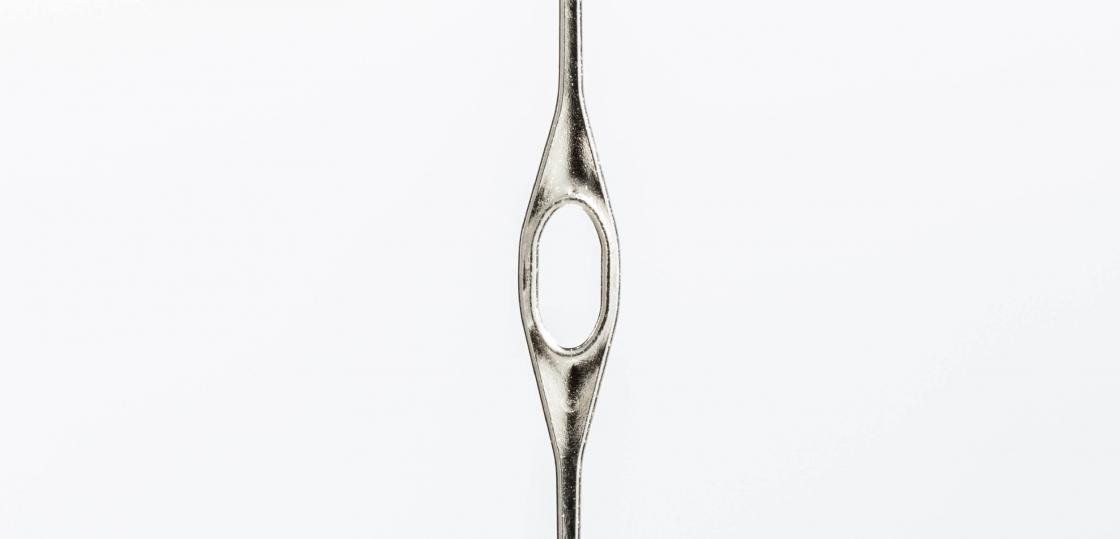
A warp break is more than one broken end. The loom stops, the weaver walks over to tie a knot, and if a fault is left in the cloth the piece goes down to second quality. When breaks go up, the yarn usually gets the blame first. But part of the cause often sits in the harness: thousands of parts the yarn passes through on every pick.
Here are four places in the harness to check first when warp breaks increase.
1. The heddle eye: where the yarn rubs the most
Every warp end runs through the eye of a heddle and moves there each time the shed opens. If the inside of the eye is rough or its shape is off, the yarn rubs on every pick, weakens over time and breaks.
The size of the eye matters too. It should not squeeze the yarn, and it should not leave it loose. If you have changed to a different yarn count, check that the heddles still suit it.
This is the problem we see most often with cheap, poorly finished heddles: the shape and surface of the eye have a direct effect on breakage. That is why we check eye shape and surface on every batch we make in our own workshop.
2. Spring balance: not too weak, not too strong
In a jacquard harness, the spring that pulls the heddle down decides how cleanly the shed closes. If the spring is too weak, the heddle does not come back and the shed does not close properly. If it is too strong, it puts extra load on the jacquard and the harness cord.
The right spring tension depends on the fabric and the jacquard. For example, the 1020R spring has a 4.0 × 1.5 mm eye, a 24 cm spring length and 60 g tension; your loom may need a different value. If springs were replaced in only part of the harness, check that they match the tension of the rest.
3. “Making do” with worn parts
Heddles, springs and the harness cord that ties the pulley to the heddle all work together. When one wears, the load shifts to the others. What we see most often is mills carrying on a while longer with old heddles and springs. That saving comes back quickly as breaks and downtime.
If breaks are concentrated in one area of the loom, take a close look at the heddles, springs and cords in that area. A part may be missing, or one of a different size may have been fitted.
4. The comber board and the harness layout
The fibre comber board keeps the heddles in order. Its hole pattern is made to suit the width of the loom and the harness plan. If the board, the harness plan and the loom do not match, the heddles do not work in the order they should.
If the loom was widened, or you moved to a different design or fabric, check that the harness plan and the comber board still fit.
Where to start
Note where and when the breaks go up: which area of the loom, which article, which yarn. Then look at the heddle, spring and cord that the broken end runs through. More often than not the problem is not one part but how the parts work together.
If you are not sure, write to us. Send a photo of an old heddle or of the harness together with your loom and jacquard details, and we can come to the mill to look at the harness if needed. You can also fill in the harness request form on our site and our harness specialist will get back to you for your loom.